Currently Empty: රු0.00

April 11, 2025
0 Comments
Minneriya National Park
Minneriya National Park (මින්නේරිය ජාතික වනෝද්යානය, மின்னேரியா தேசிய வனம்) is a park in North Central Province of Sri Lanka.
The area was designated as a national park on 12 August 1997, having been originally declared as a wildlife sanctuary in 1938. The reason for declaring the area as protected is to safeguard the catchment of the Minneriya tank and the wildlife of the surrounding area.
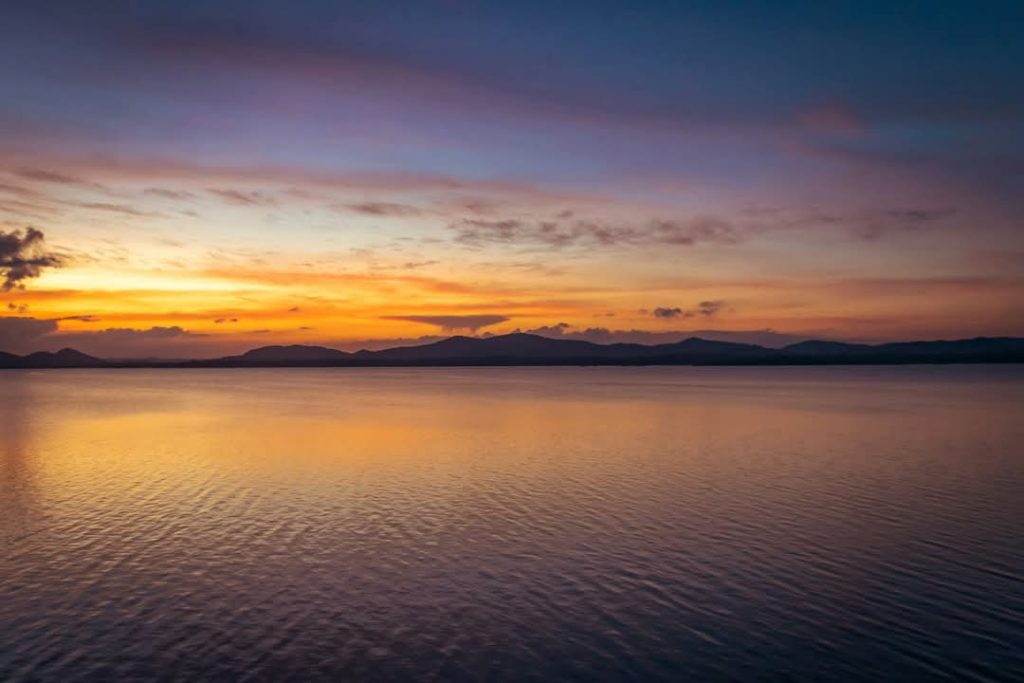
The tank is of historical importance, having been built by King Mahasen in the third century AD. The park is a dry-season feeding ground for the elephant population dwelling in forests of Matale, Polonnaruwa, and Trincomalee districts. Along with Kaudulla and Girithale, Minneriya forms one of the 70 Important Bird Areas (IBAs) of Sri Lanka. The park is situated 182 kilometres (113 mi) from Colombo.
The main sources of water for the tank are a diversion of the Amban River and the Elahera canal.
The park is home to 24 species of mammals, 160 species of birds, 9 species of amphibians, 25 species of reptiles, 26 species of fish, and 75 species of butterflies.
Elephant Gathering
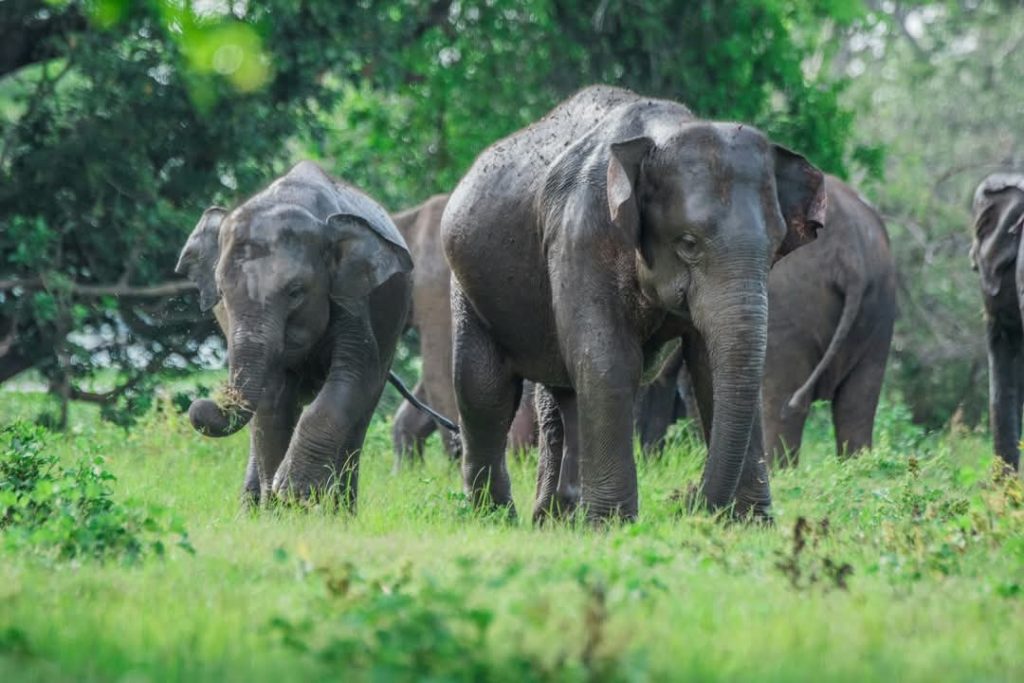
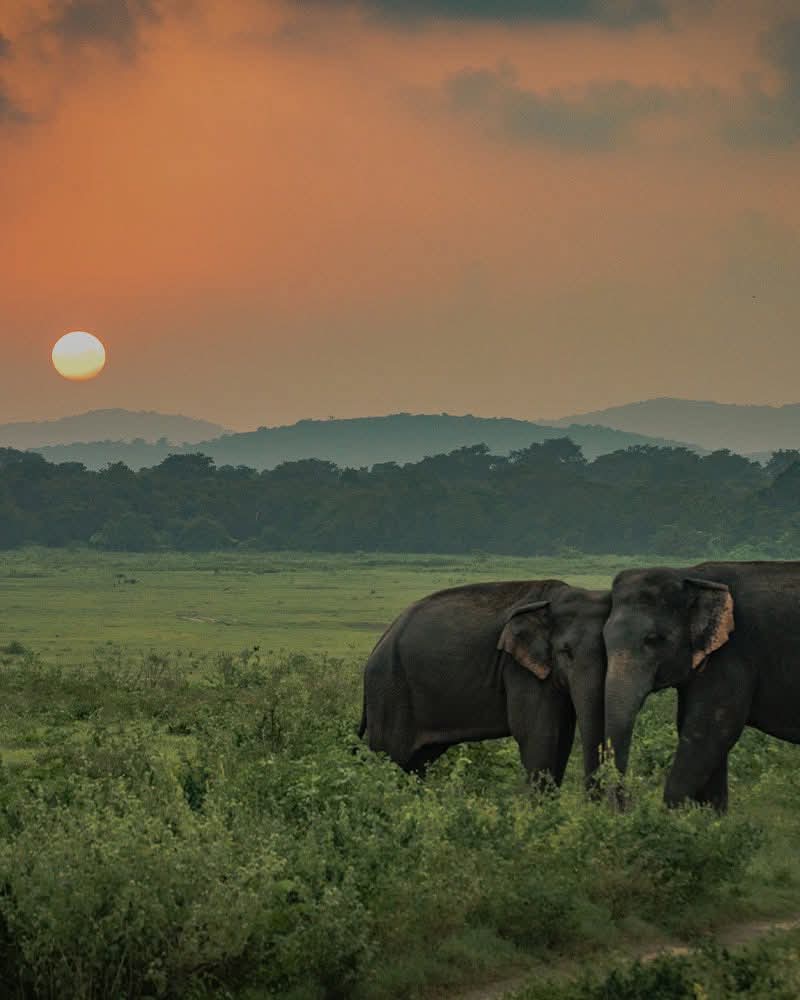
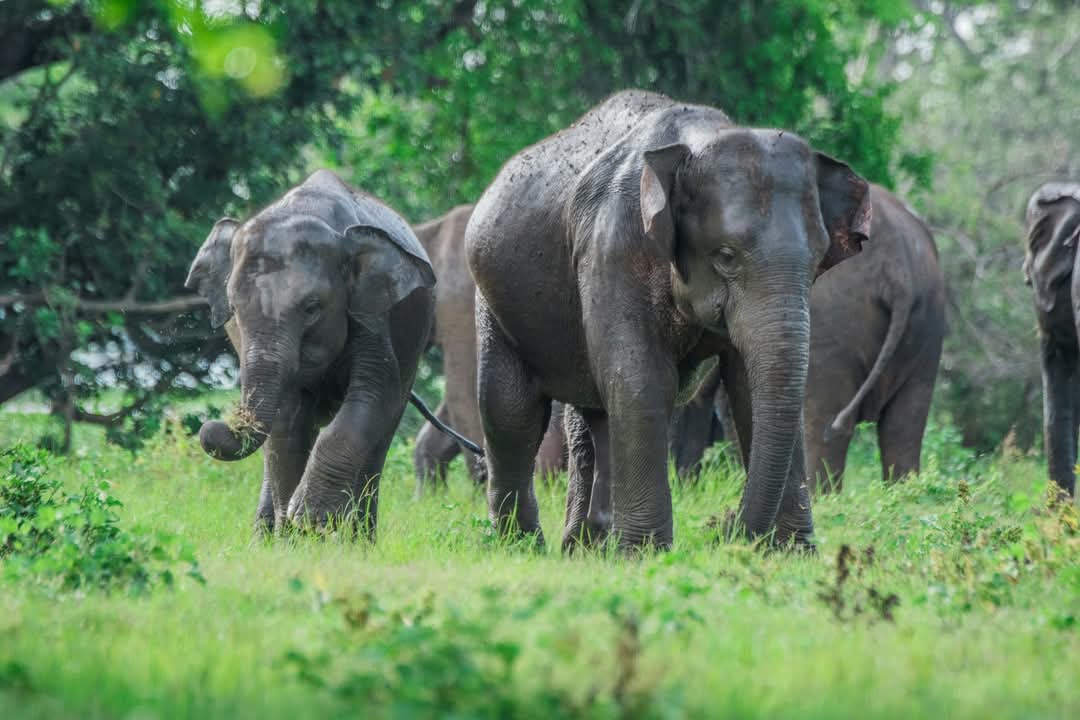
One of Minneriya’s most spectacular sights is the annual elephant gathering, where large numbers of Sri Lankan elephants congregate at the reservoir’s grass fields during the dry season. The Minneriya tank sustains this large herd, with approximately 150–200 elephants gathering regularly. Some reports estimate numbers as high as 700. These elephants migrate from Wasgamuwa National Park, benefiting from the park’s food and shelter. The elephant gathering is one of the main tourist attractions in Minneriya, especially during the dry season.
Other Animals
The park provides a habitat for Sri Lanka’s two endemic monkey species: the purple-faced langur and the toque macaque. Large herbivores such as Sri Lankan sambar deer and Sri Lankan axis deer roam the park, while rare and endangered species such as the Sri Lankan leopard and Sri Lankan sloth bear also inhabit the area. The gray slender loris has been reported in Minneriya as well.
Minneriya Reservoir serves as an important habitat for large water birds, including the lesser adjutant, painted stork, and spot-billed pelican. It also supports large flocks of resident and migratory birds, including the great white pelican, ruddy turnstone, and grey heron. Notable endemic bird species include the Sri Lanka junglefowl, Sri Lanka hanging parrot, brown-capped babbler, Sri Lanka grey hornbill, black-crested bulbul, and crimson-fronted barbet.
Among the park’s amphibians, species such as Fejervarya pulla and Polypedates cruciger have been recorded. The park is also home to eight species of endemic reptiles, all of which are considered threatened. Other reptilian inhabitants include the saltwater crocodile, Indian python, Asian water monitor, and Bengal monitor. Several freshwater fish species recorded in Minneriya are endemic to Sri Lanka.
Threats and Conservation
The main threat to Minneriya National Park is deforestation due to firewood collection. Other threats include water pollution in bathing areas, encroachment, illegal agriculture, overfishing, and poaching. Additionally, the spread of the invasive plant species Lantana camara poses a significant challenge to the park’s ecosystem. The park is part of the Minneriya-Giritale Nature Reserve, which was designated in four stages between 1988 and 1997. Conservation efforts have been proposed to restore habitats and remove livestock from the protected area.
#madebysrilankan #madeinsrilanka #vigtravel ❤️🇱🇰
📸 credit to photographers