Currently Empty: රු0.00

September 16, 2024
0 Comments
Galvihara iin Polonnaruwa
Gal Vihara (ගල් විහාරය), also known as the “rock monastery,” is a significant rock temple located in the ancient city of Polonnaruwa, Sri Lanka.
Originally named Uttararama, this temple was constructed in the 12th century by King Parakramabahu I, who was responsible for many important constructions in Polonnaruwa. Gal Vihara is the most famous for its four rock-cut statues of the Buddha, which are carved into a large granite rock face and are considered masterpieces of ancient art.
Historical and Architectural Significance
Gal Vihara’s importance extends beyond its artistic merit. The temple was a focal point for Buddhist religious activity during its time, serving as a center for Buddhist education and the purification of the Buddhist priesthood. Parakramabahu I used the site to unify the divided Buddhist fraternities in Sri Lanka, culminating in a code of conduct that he inscribed on the rock face at the temple.
The statues at Gal Vihara differ from earlier examples from the Anuradhapura period, showing a more evolved style influenced by the Amaravati school of art. Each statue was meticulously carved to utilize the maximum area of the rock, and the placement of each image was influenced by the natural height of the rock.
Statues of Gal Vihara
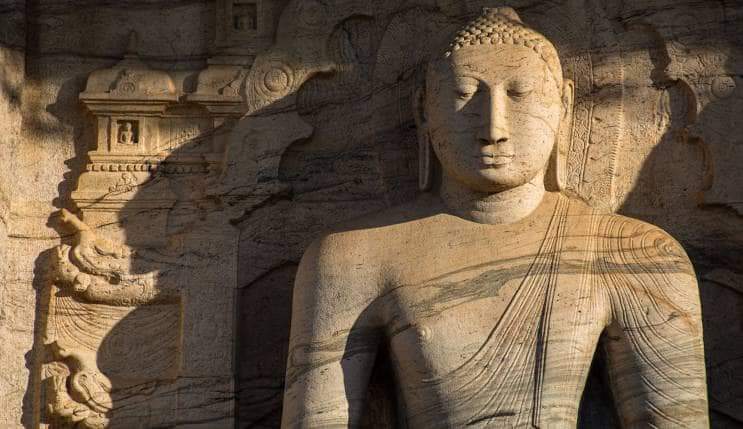
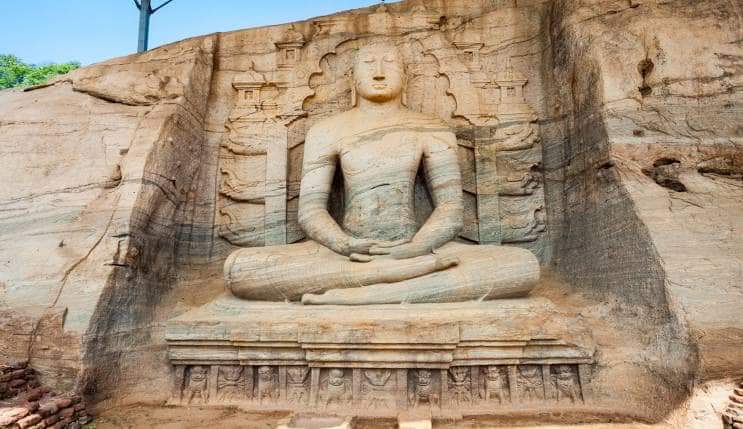
- Seated Image: This large seated Buddha, standing at 15 feet 2.5 inches, represents the dhyana mudra (a gesture of meditation). The statue is seated on a lotus throne, intricately carved with floral and lion motifs, and features four smaller Buddha images within the throne’s design, indicating Mahayana Buddhist influence.
- Vidyadhara Guha: A smaller seated Buddha, only 4 feet 7 inches tall, is located within an artificial cave. The cave is a testament to the precision of ancient Sinhalese rock carving, featuring a carved throne, parasol, and a halo (prabhamandala) with deities Brahma and Vishnu. The cave once had frescoed walls, remnants of which are still visible.
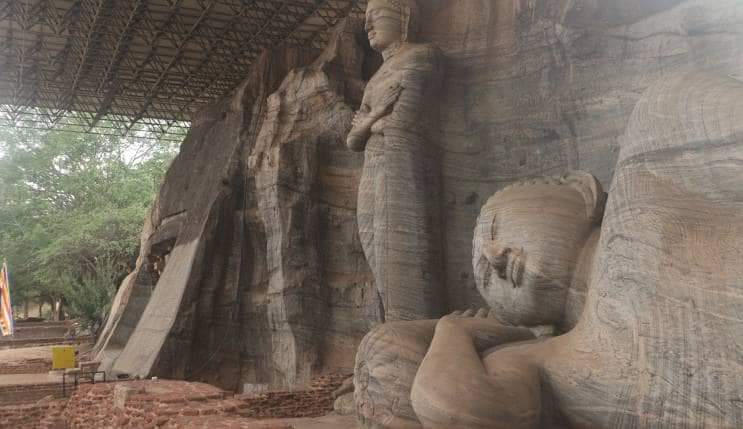
- Standing Image: The standing statue, 22 feet 9 inches tall, is unique due to the controversy over its identity. Some believe it represents the Buddha in a rare para dukkha dukkhitha mudra, symbolizing sorrow for the suffering of others. Others suggest it may depict Ananda, the Buddha’s disciple, mourning at the Buddha’s deathbed.
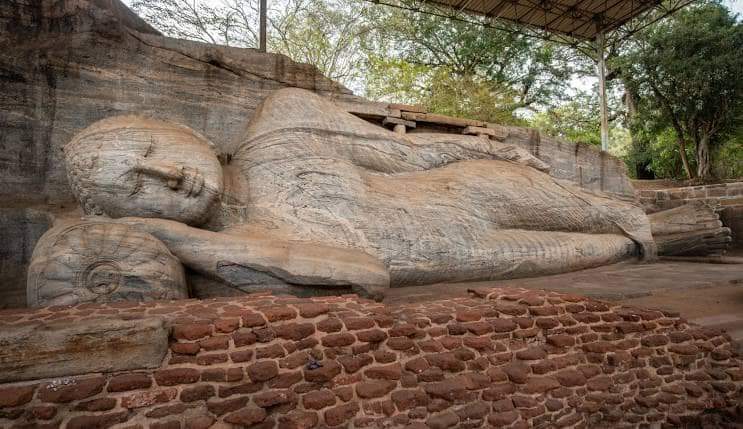
- Reclining Image: The largest of the four statues, the reclining Buddha, is 46 feet 4 inches long and depicts the Buddha’s parinirvana (final nirvana). The carving is so detailed that the pillow under the Buddha’s head appears soft and plush, despite being carved from solid rock. This statue is one of the largest sculptures in Southeast Asia.
Gal Vihara remains one of the most visited and revered sites in Sri Lanka. Its statues are not only a testament to the skill of ancient artisans but also a symbol of the country’s rich Buddhist heritage.
Despite the passage of time, the statues have been well preserved, offering a glimpse into the spiritual and artistic achievements of the ancient kingdom of Polonnaruwa.
#madebysrilankan ❤️🇱🇰
📸 credit to photographers